
Of all the feud-related topics one could explore concerning the Hatfield and McCoy Feud, what began the feud is perhaps the most controversial. Given that the history is tied to families that are very much present today, and very much emotionally connected to the story, this is a touchy subject that often comes up when visitors explore the Hatfields and McCoys feud sites while on the Driving Tour. It is easy to forget that these were real people, real tragedies, and real history. Perhaps history’s biggest contribution to modern society is the lessons learned from past mistakes, and so the question of what caused the feud is an important one, if we are to learn anything from what appears to some to be a senseless vendetta between two proud families.
Check out the Hatfields and McCoys Historic Feud Driving Tour & explore the history first-hand.
The First Question
Before we explore the origins of the feud, we must first determine what we consider the most important approach to studying this history. Some people value oral tradition, while others prioritize historical documentation, and still others value both. It is important to note that I am not a historian, nor am I an expert on the topic of the feud. However, I have worked as a tourism professional for over 15 years and have spoken to many descendants. To some, they may not be considered a reliable resource, but to me, their stories are invaluable.
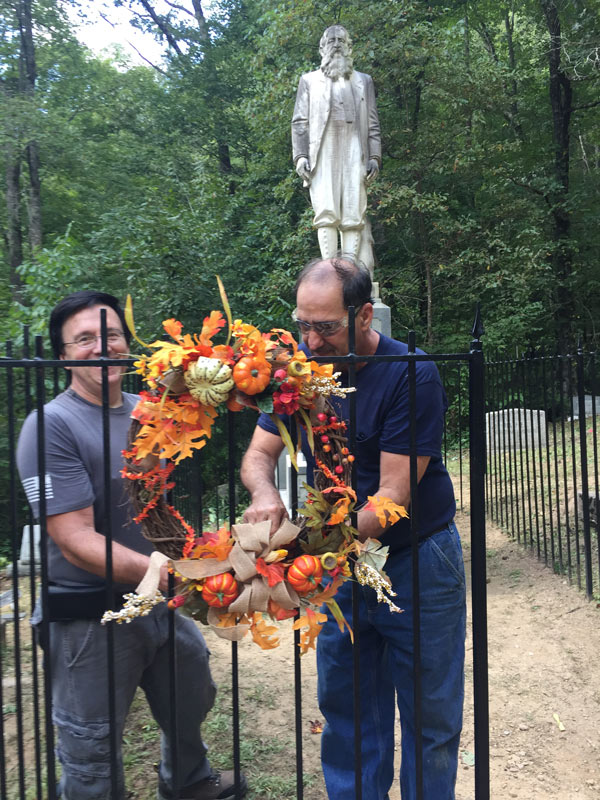
Ron McCoy and Jackie Hatfield hanging a wreath at William Anderson “Devil Anse” Hatfield’s grave.
I have found that, even today, many descendants of the feudists still hold strong feelings about this history. I have witnessed descendants display genuine acts of forgiveness toward one another on behalf of their ancestors on many occasions, particularly at the McCoy property in Hardy, Kentucky, where the Hatfields attacked, killing two of Randolph’s children and burning down their home. I have also seen McCoy descendants clean Hatfield gravestones, as well as embrace Hatfields on more than one occasion. This history still means a great deal to these people, so the question of what began the feud is one we should consider carefully.
Before I share what I believe on the subject, I would first like to present a variety of professional opinions, in no particular order.
1. The Civil War Roots: The Murder of Asa Harmon McCoy (1865)
Many historians argue that the feud did not start with a hog, but with a bullet during the closing days of the Civil War. Asa Harmon McCoy, brother to the McCoy patriarch Randolph (Randall), joined the Union Army, a choice that put him at odds with the pro-Confederate “Logan Wildcats,” led by William Anderson “Devil Anse” Hatfield.
In January 1865, Asa Harmon was found murdered in a cave near the Tug River. While Devil Anse was allegedly sick at home during the murder, his uncle, Jim Vance, was widely believed to be the culprit.
References:
• The Perspective: Historian Otis K. Rice emphasizes that the war created deep-seated political and social divisions that never truly healed, making the subsequent legal battles much more volatile.
• Rice, O. K. (1982). The Hatfields and the McCoys. University Press of Kentucky.
While I do believe that the Civil War played a large role in the origins of the Hatfields and McCoys Feud, the subject of Asa Harmon McCoy’s murder is still one whose circumstances I question. The Hatfields & McCoys miniseries (2012) displayed the reasoning behind Asa Harmon McCoy’s murder as having to do with his Union affiliation. But various descendants on both sides have expressed to me over the years that this murder was more likely due to Asa Harmon McCoy’s involvement with raiding Hatfield properties for spoils during the conflict.

Of course, there is no evidence of this that I know of, but the idea that the Logan Wildcats would kill Asa Harmon McCoy because of his affiliation with the Union puzzles me, as there were many Union-affiliated people within the area during that time. I feel like there had to be more to the story, but what do I know? There could have been some hostility between Asa, Jim and Devil Anse due to circumstances brought on during wartime, but it is unknown what those circumstances could involve. Around 13 years passed between the time Asa was murdered and Randolph McCoy accused Floyd Hatfield of nabbing his hog, so either hostilities grew in silence, or Asa’s murder was not the catalyst people think it was.
2. The Great Hog Trial (1878)
As far as legend goes, if the Civil War was the kindling, the “Hog Trial” was the match. In 1878, Randolph McCoy accused Floyd Hatfield (a cousin of Devil Anse) of stealing one of his hogs. The case went to trial before a local Justice of the Peace, Anderson “Preacher Anse” Hatfield.
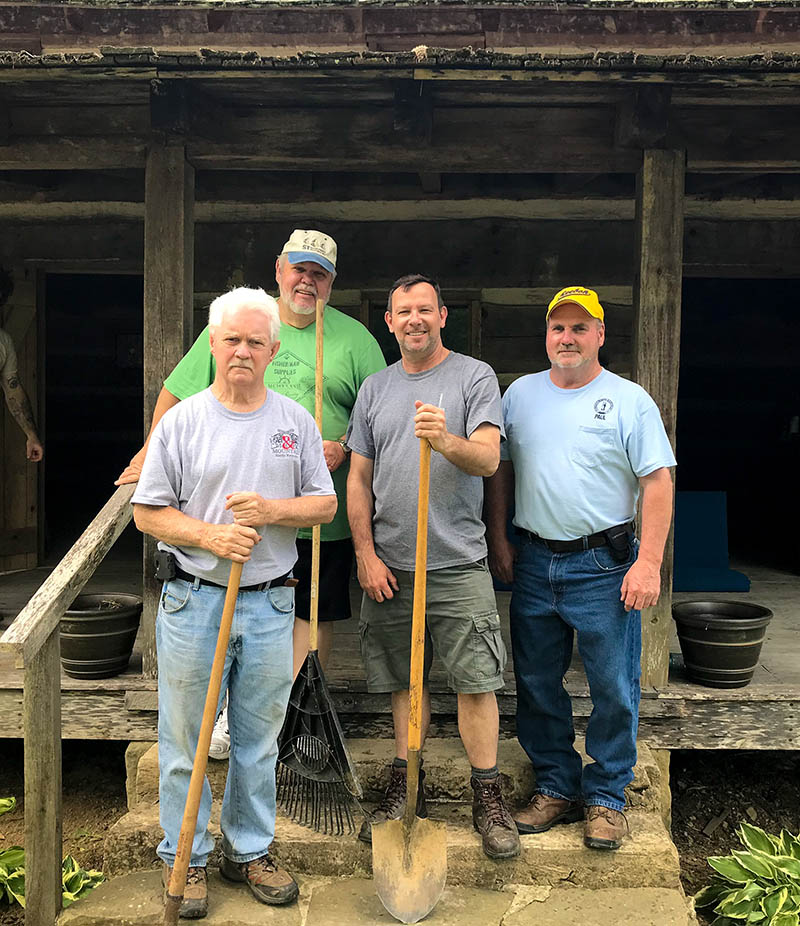
(Left to right) Descendant Bob Scott pictured with Magistrate Hillman Dotson, Tourism Executive Director Tony K. Tackett, and County Public Works Guru Paul Williamson at the historic Preacher Anse Hatfield “Hog Trial” Cabin in Blackberry, KY.
The star witness was Bill Staton, a relative of both families who sided with the Hatfields. Floyd was acquitted, leaving Randolph McCoy humiliated and furious. Two years later, Staton was killed by two of Randolph’s nephews, Sam and Paris McCoy, in what was seen as a retaliatory strike.
References:
• The Perspective: Popular historians often point to this as the “official” start of the violence, illustrating how a lack of trust in the legal system led families to seek “mountain justice.”
• King, D. (2013). The Feud: The Hatfields and McCoys: The True Story. Little, Brown and Company.
Over the years, I have gone back and forth on the validity of the hog trial as the starting point of the feud. I will say that, after speaking with a local historian on the subject, I now believe the hog trial may have had more of an impact on the origins of the feud than I had previously thought. While some historians note that there is no evidence of the hog trial, I believe the event took place and was significant.
First of all, both the Hatfields and the McCoys, who rarely agree on anything involving the feud’s history, agree that the hog trial took place, and they also agree on who was present and on the result of the trial. In addition, I have, on more than one occasion, spoken with McCoy descendants who told me their grandparents instructed them never to trust a Hatfield because of how the hog trial, along with other events, unfolded. Is this proof? No, but I certainly believe it is legitimate.
Two major points should be considered when discussing this topic. One is the importance of a hog in those days. Mountain families in 19th-century Appalachia relied on subsistence farming, with corn and pork as core staples. Hogs turned cheap, local feed, including corn, mast, and scraps, into high-calorie meat and fat. When guests tell me how ridiculous it is that a family would feud over a hog, I usually explain it this way: if someone snatches burgers from your children’s mouths, after a while, you may take it seriously, especially if you grow your own food.
When combined with other property disputes between the families, it is not difficult to imagine how such a trial could snowball into a feud.
3. The Socio-Economic Theory: Timber and Land Rights
In recent decades, a more complex “revisionist” history has emerged. Historian Altina Waller argues that the feud was not about “backwards” mountain culture, but about the transition from a traditional agrarian society to a modern industrial one.
Devil Anse Hatfield was a successful timber businessman who used the legal system to acquire vast tracts of land, some of which the McCoys felt rightfully belonged to them. In this view, the “feud” was actually a series of desperate legal and physical battles over economic survival as the railroad and coal industries moved into the region.
References:
• The Perspective: Waller posits that Randolph McCoy was a man losing his social and economic standing, while Devil Anse was an entrepreneur capitalizing on the new economy, leading to deep-seated resentment.
• Waller, A. L. (1988). Feud: Hatfields, McCoys, and Social Change in Appalachia, 1860–1900. University of North Carolina Press.
While it is difficult for me not to consider this a contributing factor to the feud, McCoy descendants have brought up one interesting point about the socio-economic theory: the McCoys were not poor. This is one of those things you will not really understand unless you go on the Hatfields and McCoys Historic Feud Driving Tour and see it for yourself. The McCoy Homeplace and Well in Hardy, Kentucky, is a very nice property. The foundation where the house once stood was rather large for an Appalachian family of the time.
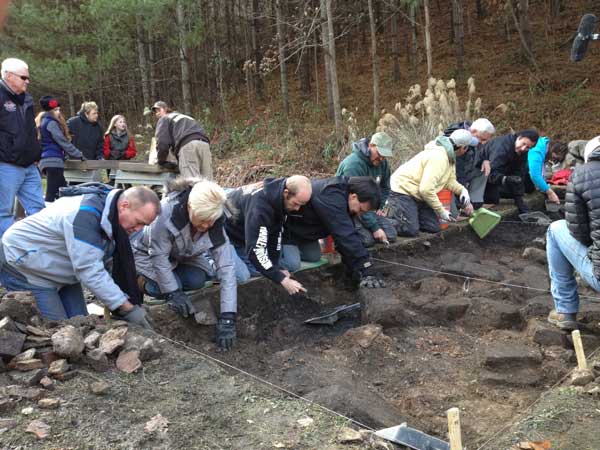
National Geographic’s Diggers, along with archeologists from the University of Kentucky found a rather impressive footprint of a cabin that was once Randolph McCoy’s homestead.
While Devil Anse Hatfield was a wealthy, well-connected man who operated a logging enterprise, Randolph McCoy was not necessarily impoverished, though his means may be considered modest in comparison to the Hatfields’. At a time when many people lived in single-room shacks, having a home and property the size of Randolph McCoy’s would have been considered middle class. That is not to say that disputes over timber and land rights did not play a factor, as they most likely played a major role. But the idea that the McCoys were economically jealous is not something I ascribe to, at least not to the degree that this perspective suggests.
4. The Star-Crossed Lovers: Roseanna and Johnse (1880)
No retelling of the feud is complete without the story of Roseanna McCoy and Johnse Hatfield. In 1880, the two fell in love at an election day gathering, and Roseanna moved into the Hatfield home in West Virginia.

The relationship was a scandal. Randolph McCoy never forgave his daughter, and the Hatfields eventually refused to let Johnse marry her. The emotional fallout, including Roseanna’s eventual heartbreak and the McCoys’ attempts to capture Johnse, added a layer of personal betrayal to the existing legal and land disputes.
References:
• The Perspective: Folklore and local tradition often prioritize this romantic tragedy, suggesting that the personal dishonor felt by the McCoys was the point of no return.
• Jones, V. C. (1948). The Hatfields and the McCoys. University of North Carolina Press. (One of the earliest comprehensive narratives of the feud).
While the story of Johnse and Roseanna makes for a compelling legend, I have come to believe that, at best, it had only a mild effect on the overall feud. While such a circumstance could certainly have added to tensions between the families, the idea that two families would kill each other over a troubled romance between two young people is not something I can accept. That dog will not hunt, so to speak.
It is also worth noting that Roseanna moved back home with her parents, Randolph and Sally, to help care for her mother after she sustained injuries during the Hatfield attack on the McCoy cabin. Roseanna is also buried beside her parents at Dils Cemetery, the first stop on the Hatfield McCoy Historic Feud Driving Tour. If there was any strife between Roseanna and her father, I am confident it was not to the degree that she was disowned or even hated by him.
5. The Point of No Return: The Death of Ellison Hatfield (1882)
While historians look at the Civil War or the “Hog Trial” as the spark, many Hatfield descendants I have spoken with over the years point to one specific, bloody afternoon as the true beginning of the feud: the 1882 Election Day fight.
On a hot August day during an election in Kentucky, a brawl broke out between three of Randolph McCoy’s sons—Tolbert, Pharmer, and Bud—and Ellison Hatfield, the brother of Devil Anse. What started as a drunken argument escalated quickly; Ellison was stabbed 26 times and then shot in the back.
References:
• The Perspective: This event shifted the conflict from the courtroom to the woods. For the Hatfields, this wasn’t about property, it was about the murder of a beloved brother. The subsequent execution of the three McCoy boys by the Hatfields is often cited as the first “official” act of the blood feud.
• Lisa Alther (2012). Blood Feud: The Hatfields and the McCoys: The Epic Story of Murder and Vengeance.
When I talk to Hatfield descendants, they often emphasize that up until this point, the Hatfields had largely used the legal system (like the Hog Trial) to settle scores. From their perspective, the McCoys were the first to bring “knives to a fistfight,” so to speak. They see the stabbing of Ellison as the ultimate provocation that left Devil Anse with no choice but to retaliate according to the “code of the mountains.”
As a tourism professional, many times I have given tours of the Election Day Fight location. Every time I’ve stood on the ground where this happened, I can still feel the weight of it. While I do not believe this event started the feud, there is no denying it was the point of no return. Once Ellison died and the McCoy boys were tied to pawpaw trees and executed in retribution, there was no going back to the courthouse. But something had to cause the McCoy boys to murder Ellison. Was it because someone owed someone money for a fiddle? Was it because the McCoy boys were conditioned to hate the Hatfields and this was their opportunity to do something about it? I feel like there’s a lot going on behind the scenes of this situation that is more to blame than the fight itself.
6. The “Bad Blood” Theory: A Medical Explanation
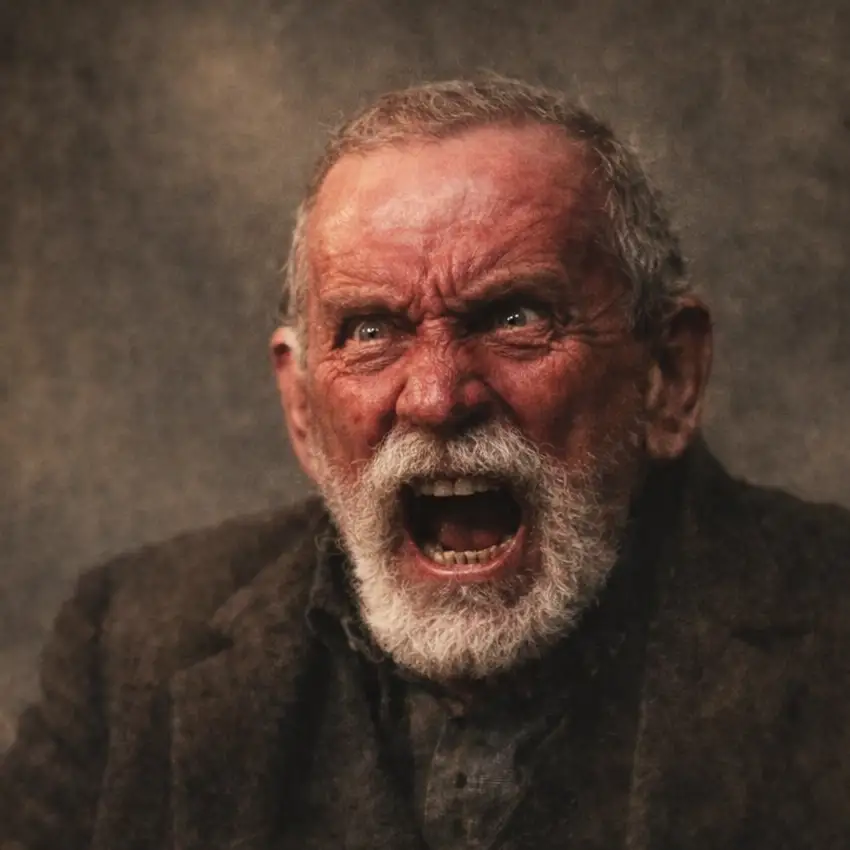
In 2007, a new theory emerged that had nothing to do with politics or pigs. A team of doctors and geneticists studied several McCoy descendants and discovered a high prevalence of Von Hippel-Lindau (VHL) disease. This genetic condition can cause tumors on the adrenal glands, leading to an overproduction of adrenaline, which in turn causes high blood pressure, racing hearts, and, most importantly, extreme “explosive rage.”
References:
• The Perspective: This theory suggests that some of the McCoys may have been biologically predisposed to violent outbursts, which would have escalated minor disagreements into deadly encounters.
• Neumann, H. P., et al. (2007). “Hatfield-McCoy Feud and Von Hippel-Lindau Disease.” Journal of the American Medical Association (JAMA).
While the Hatfield-McCoy saga is one of the most enduring stories in American folklore, it was far from an isolated incident. Rather, it was part of a broader “age of feuds” that gripped the Appalachian backcountry and the American West during the late 19th century. Historians such as Otis K. Rice and Altina Waller argue that the violence along the Tug River was part of a regional pattern fueled by the lingering trauma of the Civil War, rapid economic change brought on by the timber and coal industries, and a deep distrust of local legal institutions. Similar conflicts, such as the Rowan County War in Kentucky and the Pleasant Valley War in Arizona, show that vendettas were a common, though tragic, response to the upheaval of the era. In that sense, the Hatfield-McCoy feud was less a historical anomaly and more a representative case of its time.
So, if Randolph McCoy was experiencing the effects of Von Hippel-Lindau (VHL) disease and lingering trauma from his wartime experiences, it seems unlikely that either factor alone would explain the origins of the feud. Overall, I think cultural and biological influences may have played some role, as such factors often do in human behavior. Still, given the many circumstances surrounding the feud, I do not find it especially convincing to argue that Randolph McCoy’s biology was the primary reason he came into conflict with the Hatfields. But then again, I am not an expert.
References:
• Rice, O. K. (1982). The Hatfields and the McCoys. University Press of Kentucky.
• Waller, A. L. (1988). Feud: Hatfields, McCoys, and Social Change in Appalachia, 1860–1900. University of North Carolina Press.
So What Started the Feud?
Of course there are many other possibilities as to how the feud began. If you ask me, I believe the Civil War left behind a climate of hostility in our divided region of Appalachia, and that climate helped give rise to the feud. The war introduced chaos to a region that was already known as the “Wild, Wild East,” and the feud was, in many ways, a reflection of that reality. Law and order were still in the process of being reestablished in the area when these events unfolded, and the conflict was as much a struggle between trail justice and courthouse justice as it was a blood feud between two warring families. Though the Hatfields and McCoys often tested one another in court, if the result was not to their liking, they had no qualms about taking “justice” into their own hands. That was the nature of the time, a transitional period in which the region was becoming more governed by formal institutions, even as older ways of settling disputes still held power. While that fiercely independent spirit never truly left Appalachia, the days of trail justice have been largely, though not entirely, left behind.
I personally do not believe one side alone is to blame for the feud, though convincing cases can certainly be made against each family. I believe it was simply a matter of two perspectives clashing during an already intense time. As I said in the beginning, perhaps instead of asking, “What started the feud?” we should ask, “What can we learn from the feud?” History is most useful when it helps us gain the wisdom to avoid the mistakes of the past.





Comments are closed